
Community Update
A Leadership Perspective on AI
AI is reshaping ways of working faster than most organisations can adapt, putting talent strategy at the top of the Board agenda. As adoption accelerates, the question facing every organisation is no longer whether to embrace the technology, but how to build a workforce ready for it.
According to a survey taken at Criticaleye's 2026 CEO Retreat, 71 percent of attendees ranked new technology, including AI and machine learning, as their top priority for the next 12 months. In a similar vein, 51 percent of leaders responding to a poll at Criticaleye's 2026 CPO Retreat said driving workforce productivity and performance has risen most on the Board's agenda in the past year.
The gap between ambition and execution is testing leaders as they must navigate AI adoption both tactically and strategically. Chairs, Board leaders and CPOs alike must strike a balance between embracing the technology to get ahead and establishing guardrails to maintain organisational integrity and manage risk.
Building an AI-Ready Workforce
Strategic, responsible implementation is key to closing the gap between AI's promise and its delivery — and that starts with how leaders themselves think about the technology. Devyani Vaishampayan, Non-executive Director at NHS Supply Chain Coordination and a Board Mentor at Criticaleye, left the corporate world to pursue a career as an AI entrepreneur around ten years ago. "We are no longer talking about using technology for automating existing processes," she observed in a recent interview. "AI is being used to reimagine processes, replace white-collar tasks and offer predictive insights," added Devyani.
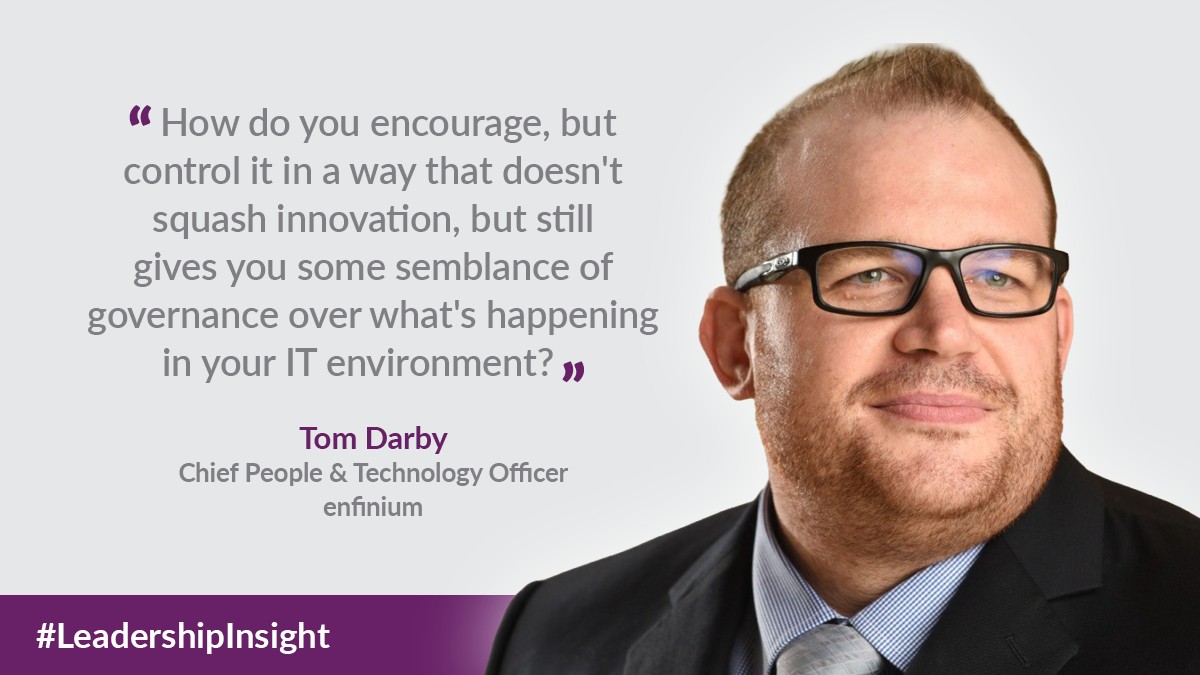
Tom Darby, Chief People & Technology Officer of enfinium, has first-hand experience of deploying AI in the workforce. With a dual mandate as CTO and CPO, he explained how the emerging technology was a key driver in his transition to the people role. "How do you ... encourage, but control it in a way that doesn't squash innovation, but still gives you some semblance of governance over what's happening in your IT environment?" Tom asked.
A similar hands-on approach underpins culture at Ocado, where automation is part of its DNA. Speaking on Criticaleye's Inspiring Leaders podcast, Claire Ainscough, CPO at the tech business, noted: "We've always had a mindset of what can we automate? How can we do things more efficiently?" That culture has translated into genuine adoption: "Even my own team are one of the highest users in the company of Generative AI, in particular, just making their own jobs more efficient."
Nicola Hodson, Non-executive Director at Beazley, takes a similar view. "The technology comes quick and fast, and so your role can be to adopt the technology to get the maximum out of it," she reasoned. "That means setting an example in terms of the way you use it yourself, encouraging your team to use it ... and then just pushing the boundaries."
The AI Talent Challenge
There are major concerns about skills and talent. A poll at the CPO Retreat asked attendees to identify the biggest risk to their workforce: 37 percent of CPOs pointed to skills gaps; and a further 35 percent cited employee engagement and trust — underlining the need to build and retain skills simultaneously.
"The number one priority for organisations, when it comes to getting workforces ready for AI, is upskilling," Devyani asserted. "Everyone needs AI talent, and it's very scarce ... [so] you have to use the strategy of 'build' and not just 'buy'."
Tom maintained that internal reskilling is essential but should go in tandem with smart external hires: "The way to manage that tension ... is to bring people in, essentially balancing the number of people who are already using it [AI] ... as well as recruiting for different behaviours and skills rather than technologies," he said.
Building on this, Nicola recommended: "You've got to train people in a different way, because you're not training them by doing all of those tasks themselves anymore. You're training them by helping them walk through the line of judgement ... and how to build their skills and critical thinking on top of it."
The Start of Organisational Redesign
AI continues to get smarter, driving the need for streamlined decision-making and, in many cases, organisational redesign. Indeed, the overwhelming majority (72 percent) of CEOs agreed that AI will radically transform business models, according to a poll taken at the CEO Retreat.
Leaders such as Nicola are prioritising a revamped structure and decision-making process as AI continues to influence ways of working. "AI is now being looked at much more as to 'how do I challenge the way my business operates? How do I rewire it?'" she reflected. "As you redesign all these workflows, you have to redesign the decision points. If there's any ambiguity, it's going to cause a problem. If you're doing things ten times faster, it's going to expose the problem ten times sooner."
The way leadership is valued is shifting too, according to Claire. "You may value leaders who can manage with a much smaller headcount but have that blend of managing both people and robots together. So, what does that skill set look like?" As data and AI skills become table stakes, she added, "the human aspect of being a leader will ... really stand out where people have developed those skills ... whether that be strategically, how you cognitively think about data, or the way that you treat your people".
There is no sign yet of the AI boom slowing down, and executive teams and Boards must decide how to navigate a future for the workforce that remains unclear. However, what is certain is that the organisations moving fastest are the ones treating skills, leadership, structure and the trust of their people as one connected challenge, not four separate ones.
Read the full article here — Building an AI-Ready Workforce
Anna Mitchell, Editorial Intern, Criticaleye
Anna Mitchell, Editorial Intern, Criticaleye