

Yen Yen Tan
Criticaleye

Tian Beng Ng
Certis

Matthew Blagg
Criticaleye

Kathleen Kee
Santen
Yen Yen Tan, Director at OCBC Bank and a Board Mentor at Criticaleye, commented: “The technology cycle is much shorter than the strategy cycle. A Board may develop a five-year strategy and meet four to five times a year, whereas technology is evolving in months or even weeks. New AI models appear, cyber threats and your customer expectations may change overnight.
“So, I do think a Board has to be digitally savvy to understand the guardrails and to ensure the business stays ahead of the game.”
As a leader, it’s imperative to figure out how to remove the distractions. Matthew Blagg, CEO at Criticaleye, commented: “It’s important to create a culture where people focus on the critical things, as opposed to work for its own sake. You’ve got to be disciplined about strategic dialogue, communication and impact. You want the ability to challenge each other, but not to create unnecessary work that wastes time.”
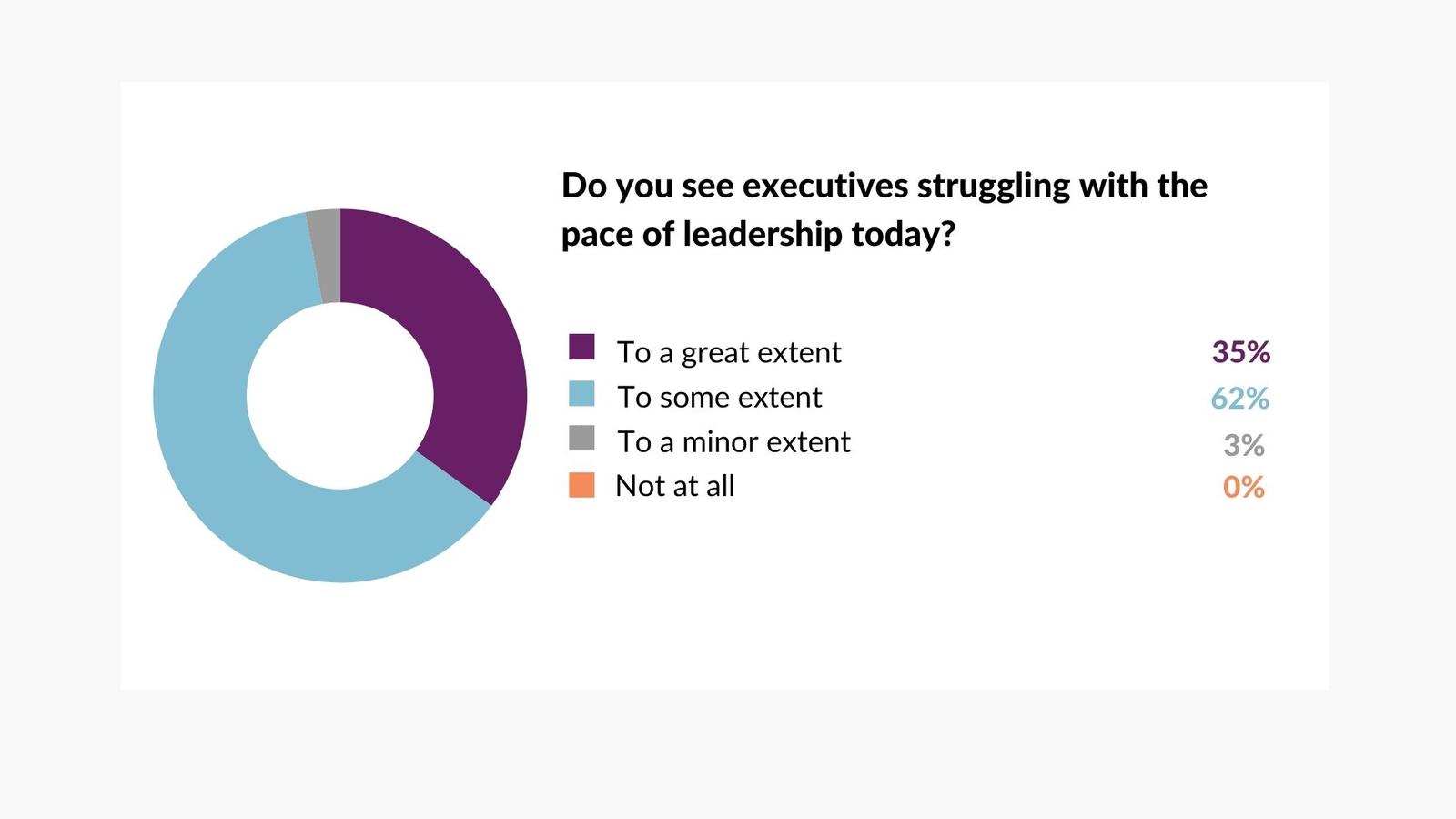
The task for leadership teams is to decipher what needs to be prioritised. After all, when you’re moving too fast, it’s easy for accidents to happen. Scott Beaumont, former President for APAC at Google, commented: “A key skill is to be able to work out what matters to you and what’s actually just noise. … I think this is a wonderful opportunity to show your value as a leader.”
Essentially, good leaders will know when to press the pause button. Scott explained: “Take a breath from time to time. So, when there is a demand for rapid decisions, I would generally ask the question, ‘Do we need to act?’
“You kind of feel like doing so in the day-to-day and when your teams are pushing you for a decision, but sometimes, I think we can be prone to putting ourselves under undue pressure.”
.jpg)
*Responses taken at Criticaleye's Asia Leadership Retreat, November 2025
Values, Behaviours and Mindset
It’s easy for leadership teams to create confusion and anxiety in employees if the reasons for change and transformation are poorly communicated. Tian Beng Ng, Group President & CEO of Certis, said: “A lot of leaders focus on the business aspect of a company, but I would say it's important to address culture. Unless you have the right mindset and values, it will be difficult to achieve the business objectives.
“For me personally, the three big things to get right are collaboration, courage and trust. These are vital if a company is to succeed.”
Kathleen Kee, Head of HR, Asia & EMEA at Santen, said: “First and foremost, leaders must intentionally make the effort to connect more than they usually would. This means having more one-on-ones and don't necessarily talk about work all the time, but connect on a more personal and emotional level—ask them how they feel about changes that are coming.”
A large number of organisations are rethinking their operating models and ways of working, which invariably asks more of middle management and the wider workforce. Kathleen added: “We should look at implementing initiatives that can enhance the culture which we are trying to build. For example, put in place programmes that encourage people to experiment with new ideas and send the message that it's okay to fail – of course, within reason – and learn through those mistakes.”
According to Scott, “it’s important to reinforce culture change by telling stories of successes, but also not sanctioning people if they make mistakes”. He continued: “I mean, if you want people to move fast or to develop a new skill, inevitably, sometimes they're going to stumble.”
The simple truth is that if an organisation is to build competitive advantage, it can’t stand still. As Matthew put it: “There's a real opportunity in culture change. In my mind, the organisations that are getting this right are looking at the skills they have and then the skills and capabilities which they need to evolve and they are plotting that course. The ones that I see outperforming are absolutely laser clear on this approach.”
Criticaleye has over 22 years of experience in transforming global and regional leaders, including CEOs, CFOs, CPOs and independent directors.
By offering targeted mentorship, strategic guidance and immersive learning experiences, Criticaleye empowers leaders with the skills, insights and Community they need to excel as world-class professionals. To find out more click here.
Get the latest leadership content straight to you.


















 (002).png "Palo Alto Networks")



We use cookies to improve your experience. By using our site, you agree to our use of cookies.