The Human Side of Automation

Authored by , Senior Editor, Criticaleye
Behind the familiar Ocado van sits one of Britain's most ambitious tech businesses. Claire Ainscough, Chief People Officer at Ocado Group, tells Criticaleye Senior Editor Bridgette Hall how she's navigating transformation, succession, and a world where humans and automation work side by side
Most people know Ocado as the place they order their groceries online. Few appreciate that the UK-listed business is, at its core, a global technology licensing company — one that has spent two decades building proprietary robotics, automation and logistics software, and now sells that capability to some of the world's largest retailers.
That makes
Claire Ainscough, Chief People Officer at Ocado, a particularly timely voice. A career HR professional with more than two decades of experience spanning startups, distribution and global tech, she joined Ocado in December 2019 — weeks before Covid arrived and immediately tested everything she thought she knew about building relationships in a new organisation. Since then, she has steered the people agenda through a profound transformation: from a UK-centric B2C operation to a B2B technology partner serving 13 global clients.
Here, Claire reflects on what high performance looks like in a business with an 18-month delivery cycle, why the CPO of the future needs to speak the language of technology and why — in an age of AI — the human qualities of leadership matter more than ever.
BH: People think of Ocado as purely a retailer. Can you explain why it’s become much more than that?
CA: Most people in the UK know it as a retail business, and it does sell absolutely fabulous food through a joint venture with Marks & Spencer. Within the core group, there are around 15,000 people in logistics, serving the retail business and the online operations of Morrisons. But then there's a large tech organisation.
We took the proprietary technology we built and now sell it to grocers — and non-grocers — all over the world. We have 13 partners, including Kroger, Sobeys, Coles, Aeon and Lotte. In some cases, we provide both hardware and software; in others, just the hardware to automate warehouses. When you look at the UK landscape, there aren't many large businesses genuinely in the tech space. That was a big part of what attracted me.
BH: Strategically, what was changing when you joined at the end of 2019?
CA: The joint venture had just happened and Ocado was rethinking a few things at once: maturing their people practices to be much more tech-focused; scaling quickly into new markets and thinking about the right systems, people and tools to do that; evolving the executive team, because at that scale, people were coming up to retirement age; and then finally, making that genuine pivot from B2C to B2B, which is really hard because the mindset and culture need to be entirely different when you've got 12 partners rather than millions of consumers.
BH: How do you split the CPO role between the day job and the longer-term strategic agenda?
CA: The day job is keeping the engine running: hiring, onboarding, engagement and rewards. It's the machine that keeps the business going today. The longer term is the ability to look three to five years out and ask: ‘What do we need to start doing now?’ Because you can't just pivot in a moment. Things like what the executive team might look like because people will retire and leave. Culture is a really big one — you can never wake up one day and say, ‘Let's change the culture.’ Succession, skills of the future, org design — these are genuinely long-term things and it's easy to get caught up in the day job.
It becomes particularly pertinent when the cost is tight because you have to keep the lights on. The things that get cut when HR functions come under pressure are often the strategic ones. Making sure you can still do a bit of both, even in more constrained times, is really important.
BH: Where can the CPO make the biggest strategic difference to the Board and executive team?
CA: Succession is where I think the CPO can make the biggest difference, especially in a business like Ocado that's been very innovation-led. We really want to bring people through the organisation, and we think constantly about [things like]: in three years, what will be the right skill set around that table? Will there even be the same jobs?
One of the more interesting shifts is how we think about leadership in the context of automation. In the past, you valued leaders who managed large-scale teams and paid accordingly. But when you start managing both people and robots together, the headcount that sits beneath a leader may look quite different. So, what does that skill set look like… and think about it? That's becoming an increasingly important question.
BH: What does high performance look like at Ocado?
CA: This has been one of the most interesting questions for us, partly because of the B2C to B2B pivot. In retail, you're looking at data every minute, every hour and pivoting in the moment. In our version of a B2B business, where the cycle for building a warehouse or new technology is around 18 months, you place bets today and may not know for 18 months whether they worked. It can be very painful. In retail you have the gratification of seeing results in the moment. It's a much longer performance cycle in a business like Ocado ... So we've had to think carefully about how we set the right goals and measure progress quarterly to know we're on track within that longer period.
We use an OKR methodology, which is quite agile. It's about not setting something so long term you can't get there, but breaking the elephant down into manageable pieces. And underpinning all of that needs to be the full ecosystem: performance and talent processes, feedback methodology, the quality of your managers. We haven't always got that right, but it's been a fascinating exercise in figuring out the unique formula for a unique business.
BH: How has your leadership style evolved?
CA: I've definitely made a decision to be authentic to my own style. I want to be as transparent as I can — and in this job, you can't always do that, but where I can, I really try. I run a lot of office hours and genuinely encourage people at every level to come and ask me something or showcase what they're working on. It forms a personal brand of approachability.
If there's one thing that's really changed – and it's been hard to get here – it's the ability to delegate well. I'm quite a high-control individual; I like to be in control of the things around me. But once you're running a big team and you've hired people who are honestly more brilliant at their piece than you could ever be, why wouldn't you give them the space to do those things? What it allows you to do is step back and see how everything joins together.
When I was at Expedia, I had a massive ‘aha’ moment — I suddenly saw the power of the intersect between talent and reward. And whilst I'd run both functions, I hadn't seen how they connected. Why do humans behave the way they behave? It's a whole mix of personal motivation, how they're paid, and how all those things come together. It made me realise that trying to do all of those things myself was no use for my role. I might as well step back, let people do what they're brilliant at and really value them. That's probably where I've personally grown the most.
BH: What advice would you give to a first-time Group CPO?
CA: Build a really strong relationship with your head of technology. Naturally, as a CPO, you build close relationships with the CEO, CFO and General Counsel — but speaking the language of tech, understanding how it's evolving, is increasingly important for how we think about the workforce. CPOs have done well building commercial skills over the last few years, and that matters but now the technology dimension matters too.
And then more broadly: this is a job that requires resilience and it can be quite lonely. There are moments where you feel like you're carrying the weight of the world. Whatever works for you — for me it turned out to be quite simple: eat well, sleep well, exercise and do something for your wellbeing. Having that grounded sense of a life outside work is very helpful.

.png)
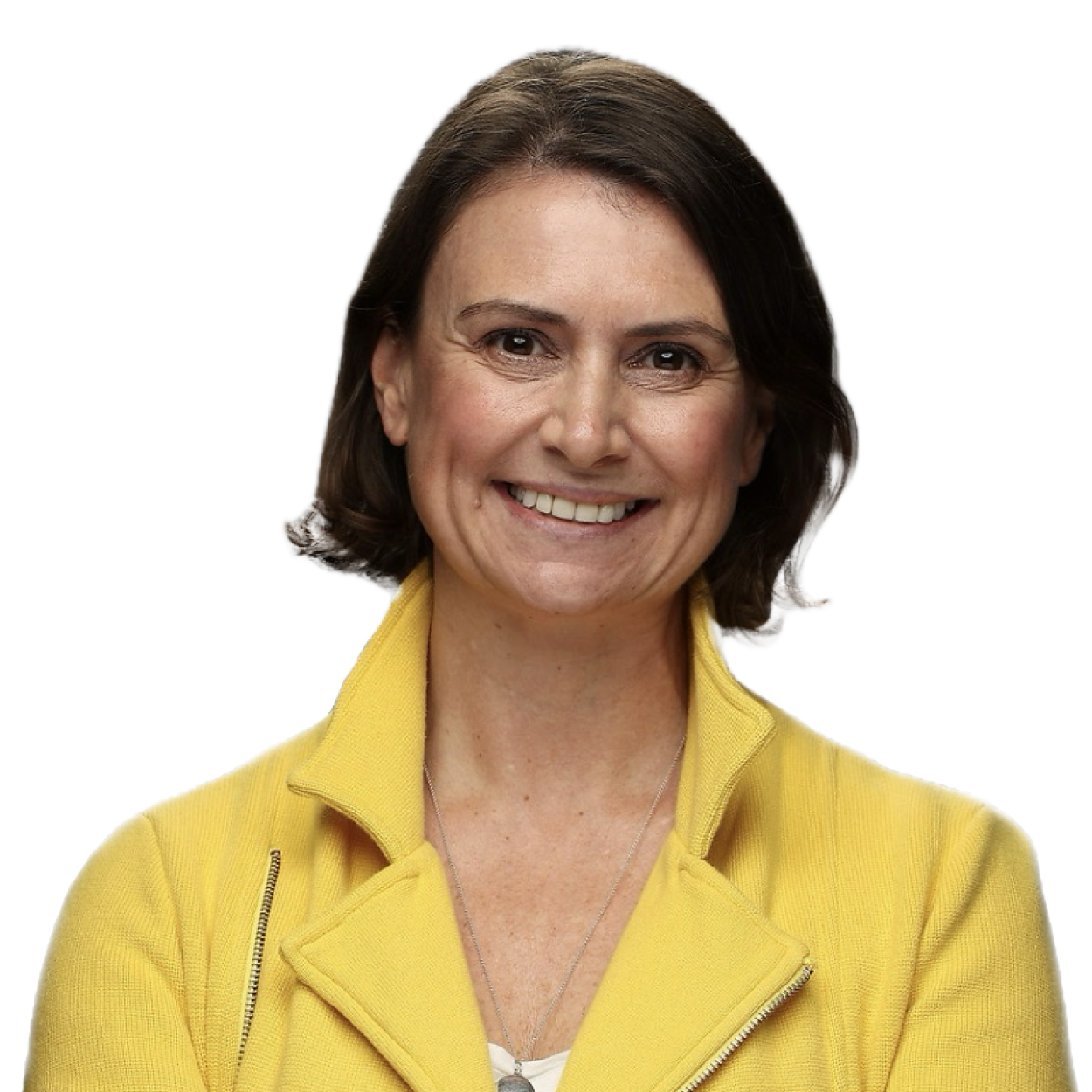 Claire Ainscough
 Displaying 1 to 3 of 148