VIEWPOINTS | Making the Leap from CPO to NED

Authored by , Senior Editor, Criticaleye
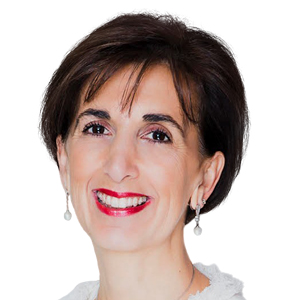
Tea Colaianni MBE's career began in Brussels as a lawyer before deciding she wanted to be in the driving seat. "I didn't want just to be advising companies on what to do: I wanted to do stuff," she says.
That instinct took her in-house, first into telecoms as Director of Employee Relations at Global One, then to London, and eventually to Hilton Worldwide, where, as Vice President of Human Resources, she would spend eight years navigating an international merger, a shift from UK to US listing, and a take-private by Blackstone.
From Hilton, she moved to Merlin Entertainments as Chief People Officer, where she navigated acquisitions, integrations and an IPO. "I got my fair share of scars and war stories," she reflects.
Today she sits on the Board of Watches of Switzerland as Senior Independent Director, serves on the Board of SD Works and acts as a Board Mentor at Criticaleye.
Q: How did you set about making the transition from executive to NED?
A: I was quite adamant that I wanted to contribute to businesses in a much broader way. … The non-exec role provided me with an opportunity to have and share an opinion on everything that goes on in the business. The first challenge was combining a full-time, quite demanding global executive role with the commitments a non-exec role entails … especially when a crisis starts in one place and another at the same time.
Q: In those early days as a NED, did you have to rethink the way you communicated in the Boardroom?
A: ... Having come from functional expertise, everybody expects you to talk about what you know and what you have done. So how could I add value to the broader picture when you're sitting around the table with people who know much more than you do? What is my value proposition, and how do I articulate that in a credible, effective way? I talk a lot about finding your voice and using your voice, which is easy when you are the subject matter expert, but when you're not, how do you do that?
[Finally], learning how to contribute in a constructive way, not a destructive way — how to ask questions and influence in a very different context from an executive environment. As a non-exec, you don't get stuff done. You're there to challenge and scrutinise, advise and provide a different angle and perspective. I still rehearse in my mind how to ask a question, because otherwise it can come across as very direct — and you are not directing anything. … That was a challenge for me in the early days.
Q: For CPOs that want to pursue a portfolio career — where to start?
A: Developing a narrative of the value they bring is really important, and that requires practice. Once you can articulate the value that you bring … more broadly in terms of transformation projects and working closely with the CEO and the Board — that is a first step in the right direction.
To hear more from Tea about her journey from Chief People Officer to the Boardroom, listen to the full podcast here
Q: What about building out your network?
A: Nobody is going to come and find you in your office. You've got to get out there and talk to people. … Connect with headhunters — all my roles have come through a selection process; nobody has come tapping on my shoulder saying: ‘Can you come and join this Board’.
Join … a community like Criticaleye. It gave me so many opportunities to meet people from different sectors at a senior level...
Make sure you use and leverage the connections of your CEO, CFO, your colleagues on the executive Board — and if you are in a listed environment, your non-executive directors — because they are incredibly connected.
Q: What advice would you give CPOs looking to step onto a Board?
A: Boards require executives who are able to contribute very broadly to constant challenges — whether economic, geopolitical, or whatever else keeps being thrown at us. We are in a 'permacrisis' world and we have been for some time. Diversifying experiences, articulating that breadth of skills … and making sure people see the value you can bring to the table are all things to focus on.
After all of that, I just always say: give it a go. Find out as much as possible about the role. It always surprises me how naive some people can be about the governance, responsibility and time commitment that it takes to do it properly… The first role that came to me, everybody was saying: ‘Should you not wait for something better?’ I was so lucky that I took that role. I learned so much from amazing people around the Board table who are still friends, mentors and advisors to me.
So, give it a try.
.png)




 Displaying 1 to 3 of 226