VIEWPOINTS | How to Create Forward-thinking Boards
Authored by Marc Barber, Director of Content, Criticaleye
Good governance and effective oversight are the baseline for high-performing Boards. What distinguishes the absolute best is the way in which executive and non-executive directors support and challenge each other on navigating the unexpected and how they think about the future.
It’s debatable how many Boards attain the necessary levels of trust, respect and knowledge to create that kind of dynamic environment for strategic debate and decision-making.
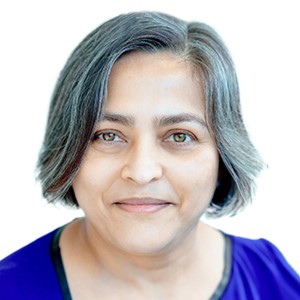
Shefaly Yogendra, an experienced portfolio non-executive director and long-standing Board Mentor at Criticaleye, tackles this topic with gusto in her new book, Uncharted Spaces: Reset the agenda. Reimagine the boardroom.
Here, Shefaly talks about some of the core themes in the book and why culture and mindset are essential if Boards are to be successful.
Q: I’m intrigued by this idea of ‘resetting the agenda’ when it comes to Boards. What do you mean by that?
A: It’s essentially about grounding what your Board talks about in the emergent reality. Often, it’s easy for the agenda to be just five minutes for this; seven minutes for that; sign off that approval… But that's not the entire job. Locate your Board agenda in reality and – when the reality is shifting – your agenda needs to keep up.
Q: Where have you seen Board dynamics working well?
A: At Harmony Energy Income Trust, where I was on the Board, we were all learning. The asset managers and sector specialists learned about the responsibilities of being listed, dealing with the City and investors, and the need for timely disclosures. Those who had been on listed boards but were new to the BESS (Battery Energy Storage System) sector, were learning about the peculiarities of resilience mechanisms for enabling transition to renewables. Together we weathered headwinds from geopolitics, macroeconomics [and] domestic politics. Harmony is a full case study in the book, end to end, from its IPO to its acquisition and delisting.
So, that Board was very curious and highly engaged.
Q: What are your reflections on why Boards lose focus and go awry?
A: They talk about and prioritise the wrong things with the wrong people around the table. The other problem is that compliance and governance are about the past and hindsight, whereas the focus should be on the future and foresight which are strategic.
Foresight is about emerging risk work, which also means understanding where the opportunities exist. Especially in the dynamic environment in which we are operating currently.
Q: What would having the ‘right people’ mean when, for example, it comes to holding a meaningful conversation on technology? Should there be one designated tech expert on the Board?
A: Nowadays large organisations have CIOs, CTOs, CISOs, Chief Data Officers, and some are now creating Chief AI Officers. So, how can you have one ‘tech person’ on a Board that understands what each of these execs are saying, and for this individual to be representative of the amalgamated view of the Board? How do we know this person has really understood what’s been told?
Can you have one technology polyglot on a Board? Where will you find that person and how will you evaluate such a person?
Q: It sounds like this has to be a more collective responsibility. Is that correct?
A: Yes, the responsibility is collective. That is why no one person’s expertise is sufficient. You want individuals to be curious. The Chair has to bring that out, providing the right cultural environment to enable the conversation.
Q: What are the red flags for you that a Board lacks the right mindset?
A: I have known Boards where one wonders: why are you here? You clearly don't like this; you don't like the workload; you don't bloody read the Board Pack; it's very obvious to everyone. Some people treat it like any other job and I don't think it is any other job. I really feel you're operating on your reputation as your main capital. It's not like any other job. I mean, super mediocre people manage to make excellent careers in the corporate world. That is a job. This isn't.
Q: It can’t just be about box-ticking and compliance. Is it fair to say that what you want are live, dynamic conversations and thinking?
A: Some Boards do work. There are structural things and cultural things. Structural things relate to, for example, what specific Committees do and they have their own papers in the Board Pack, and then the Committee Chair gets given ten minutes to talk about the important things. So, how the work gets done on a Board is hugely varied and figuring that out is part of the job of being an effective contributor. The Board’s culture enables lively and dynamic conversations.
Q: What do you want your readers to take away from Uncharted Spaces?
A: I hope it anchors and facilitates more Board conversations. I take them through a journey which criss-crosses between technology, climate, geopolitics, and for it to connect all the time to the strategic agenda of their Boardroom and their organisation.
That is my hope. It is a conversation starter and I am here to facilitate such conversations for forward-thinking Boards.
Jon Rigby CBE, Senior Cyber Advisor and former Chief Cyber Officer at Liberty Specialty Markets, joins Jacob Ambrose Willson, Senior Editor at Criticaleye, to explore what it truly takes for organisations to build cy...
Claire Ainscough, Chief People Officer (CPO) at Ocado Group joins Bridgette Hall to explore what it takes to lead the people agenda in a fast-moving, technology-driven business.
As ...
Behind the familiar Ocado van sits one of Britain's most ambitious tech businesses. Claire Ainscough, Chief People Officer at Ocado Group, tells Criticaleye Senior Editor Bridgette Hall how she's navigating...


.png)
 Displaying 1 to 3 of 197